-

The Transformative Power of Storytelling
Storytelling is a transformative tool that mirrors the self, evokes emotional engagement, and models the journey of personal growth. By connecting experiences, fostering empathy, and shaping identity, narratives guide reflection, resilience, and behavior. Engaging with stories allows individuals to reframe their lives, cultivate insight, and embrace meaningful change.
-

The Therapeutic Power of Silence
Silence is a powerful therapeutic tool that fosters authentic emotional experience. By pausing and remaining present, therapists create space for clients to move beyond intellectual discussion into lived feeling. Thoughtful silence enhances reflection, emotional processing, and insight, strengthens the therapeutic alliance, and allows transformative experiences to unfold naturally in therapy.
-

Identity Threat and Narcissistic Injury
Insight-based therapy progresses from recognizing surface-level conflicts to identifying deep identity threats and subtle narcissistic injury. Initial practice rounds build awareness of defenses, attachment patterns, and shame, while targeted drills condense this into high-impact interventions. By linking behavior, vulnerability, and self-image, therapists evoke transformative insight that is precise, evocative, and deeply integrated.
-

Recognizing Moments of Insight
Transformative insight in therapy emerges when emotional intensity, pattern recognition, ambivalence, somatic cues, and relational attunement converge. Therapists can facilitate these moments by reflecting both content and underlying meaning, using empathic guess-questions, and supporting client curiosity, enabling lasting self-understanding and behavioral change. Recognizing these cues optimizes therapeutic impact.
-
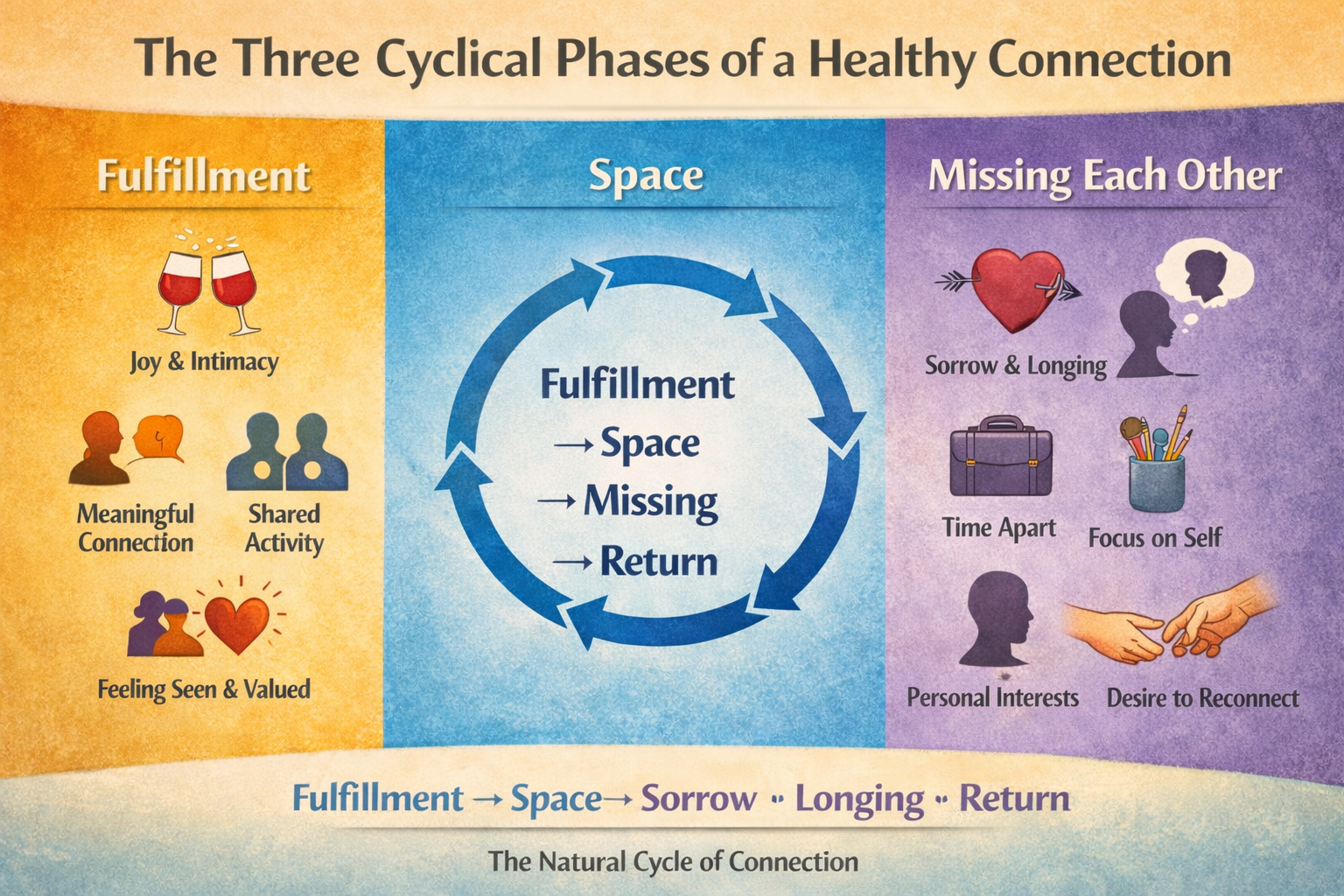
Fulfillment, Space and Longing
Healthy connection follows a natural rhythm: fulfillment, space, missing, and return. Real contact nourishes the bond. Space preserves individuality. Missing brings clean sorrow, which deepens value and transforms into longing. When this cycle is honored, relationships strengthen through voluntary reconnection rather than anxiety, overexposure, or emotional manipulation.
-

Disorganized Attachment: Hidden Strengths
Fearful-avoidant attachers are often misunderstood, yet they possess extraordinary strengths that shine most vividly when paired with secure partners. Their heightened emotional awareness allows them to perceive subtle cues, respond empathetically, and navigate complex relational dynamics with insight. Deeply introspective, they cultivate emotional intelligence, resilience, and creativity, transforming vulnerability into profound intimacy. Secure partners provide…
-

Boundaries Versus Walls
There is a subtle but powerful difference between boundaries and walls — and confusing the two quietly shapes the quality of our relationships. Boundaries are an expression of self-respect. They protect integrity without shutting down connection. They are calm, intentional, and rooted in clarity about values and limits. Walls, by contrast, are defensive structures. They…
-
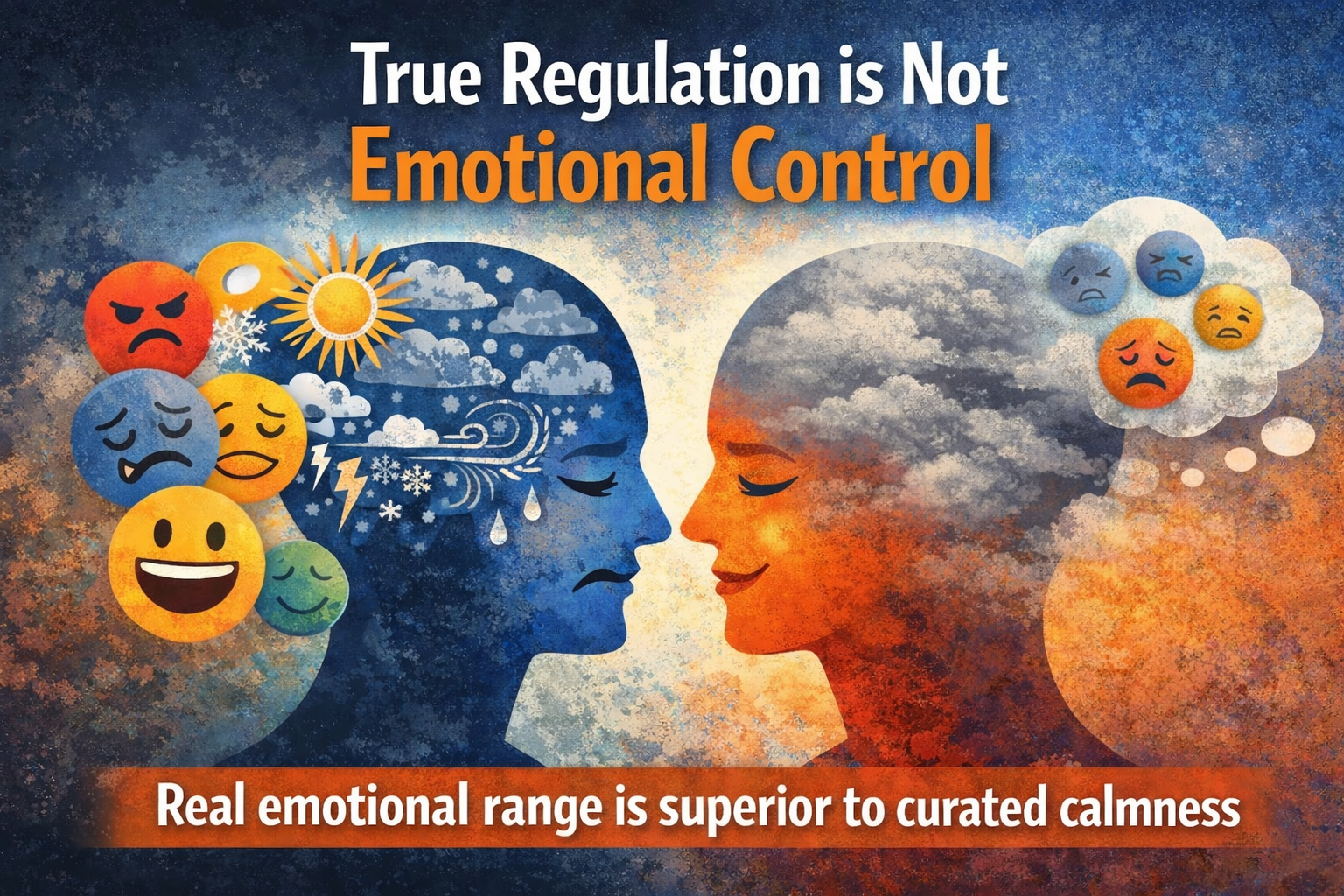
True Regulation is Not Emotional Control
The Myth of Emotional Control In modern therapeutic and self-help culture, regulation is often equated with emotional restraint. The regulated person is imagined as calm, steady, measured, and unreactive. This image is appealing, especially in a world that feels increasingly chaotic. But it is also misleading. Emotional control is not the same thing as regulation.…
-
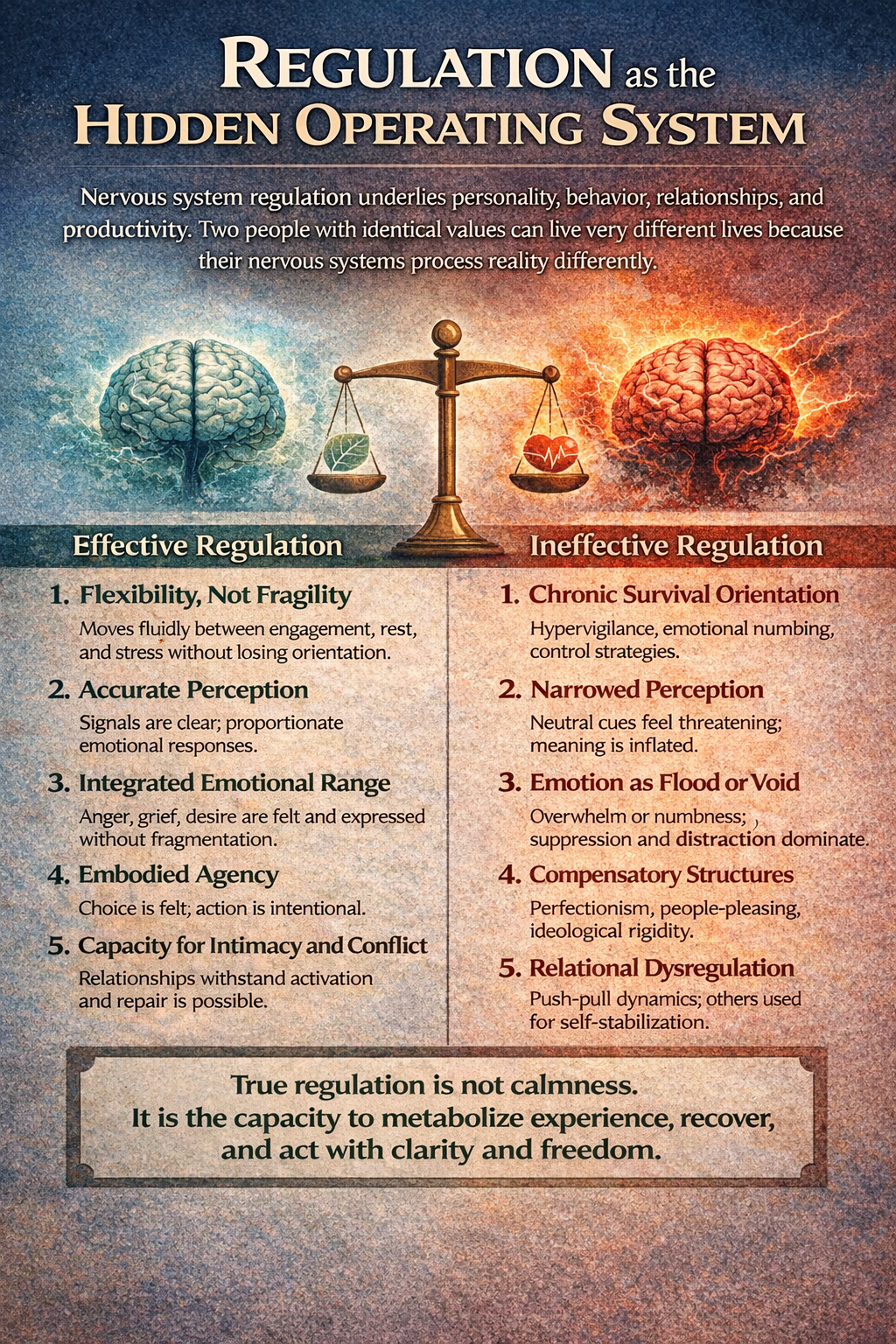
Regulation and Human Functioning
Nervous System Regulation as the Hidden Operating System Nervous system regulation is the unseen infrastructure beneath personality, behavior, relationships, productivity, and even ideology. Two people can hold identical values, skills, and intentions yet live radically different lives because their nervous systems process reality differently. When regulation is effective, life feels navigable—even when difficult. When regulation…
-

Shifting from Certainty to Curiosity
Introduction: The Comfort of Certainty Certainty is deeply appealing. It reassures us, protects us from unpredictability, and provides a sense of control over our lives. When we are certain, the world seems manageable, and decisions feel safe. Yet, certainty comes with a hidden cost. It can narrow perception, foster rigidity, and create blind spots. When…
-
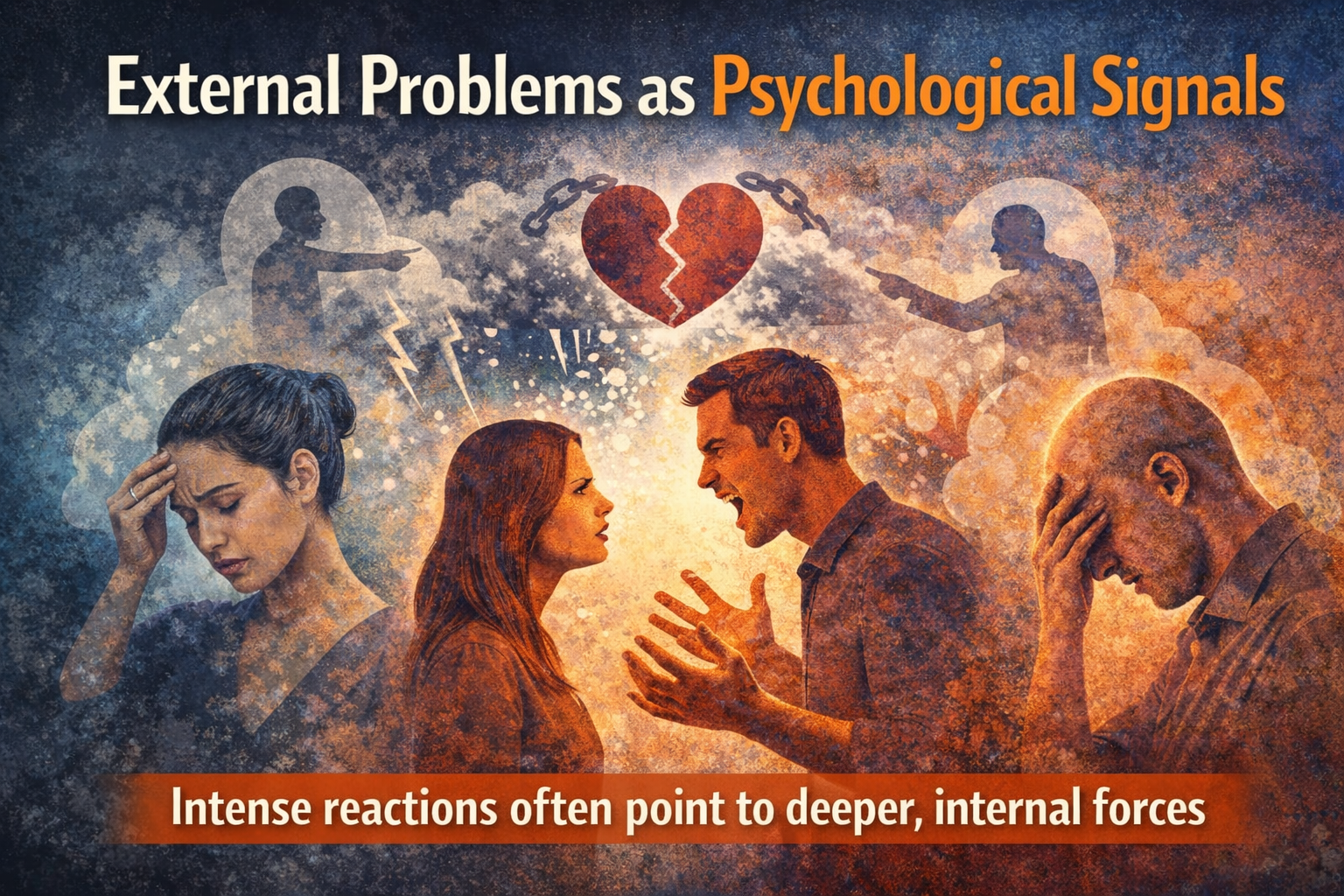
External Problems as Psychological Signals
Most people experience moments when something outside themselves feels unexpectedly disturbing. A relationship suddenly becomes tense, a familiar dynamic feels intolerable, or a seemingly minor interaction provokes outsized emotion. While it is natural to focus on the external situation—what the other person did, what went wrong, how it should be fixed—depth psychology suggests that something…
-
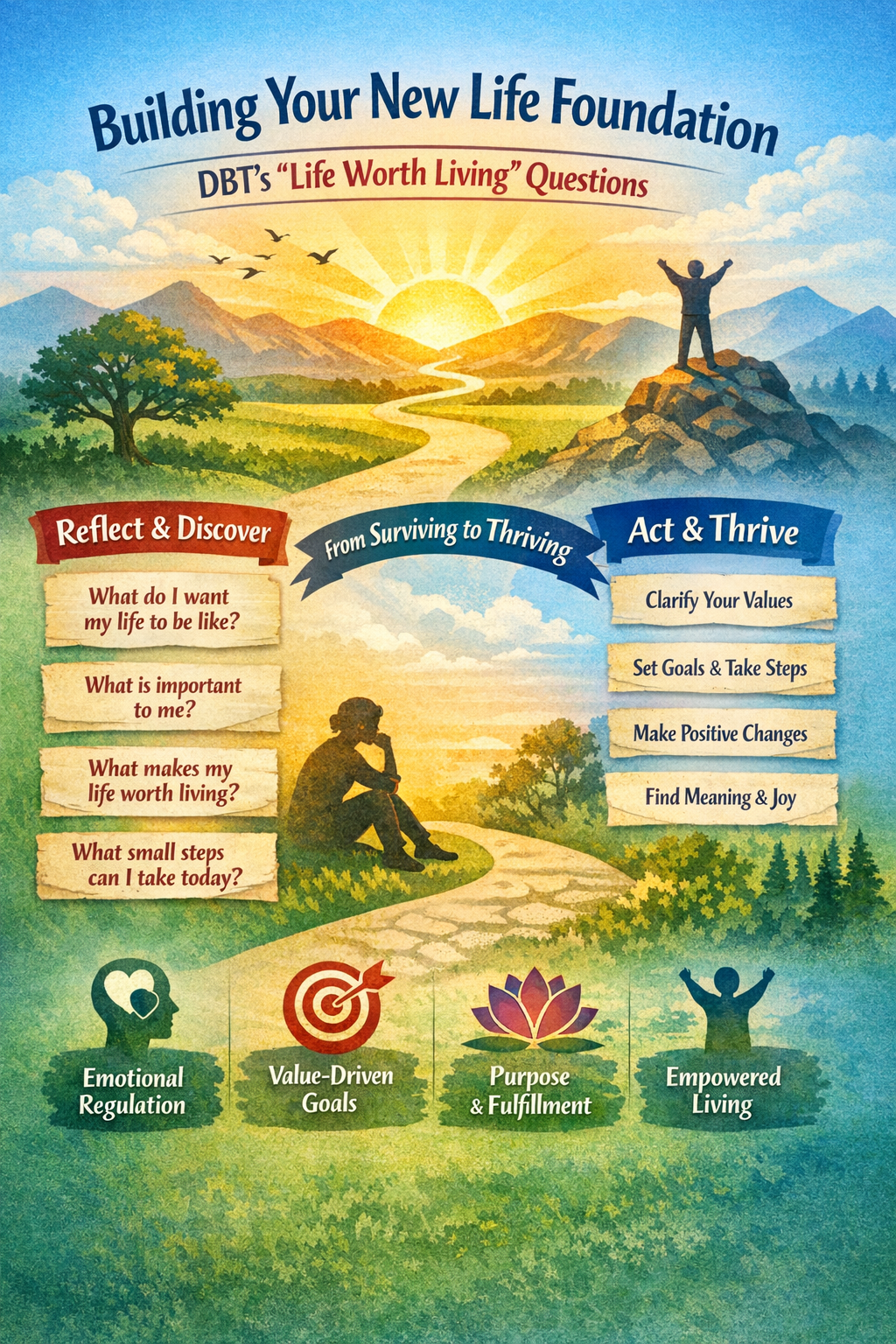
DBT’s Life Worth Living Questions
Developed within Dialectical Behavior Therapy by Marsha Linehan, the Life Worth Living questions shift the focus from merely reducing distress to actively building meaning. Instead of asking only, “How do I stop suffering?”, they invite a deeper reflection: “What kind of life am I trying to create?” By clarifying values, identifying sources of joy, and…
-
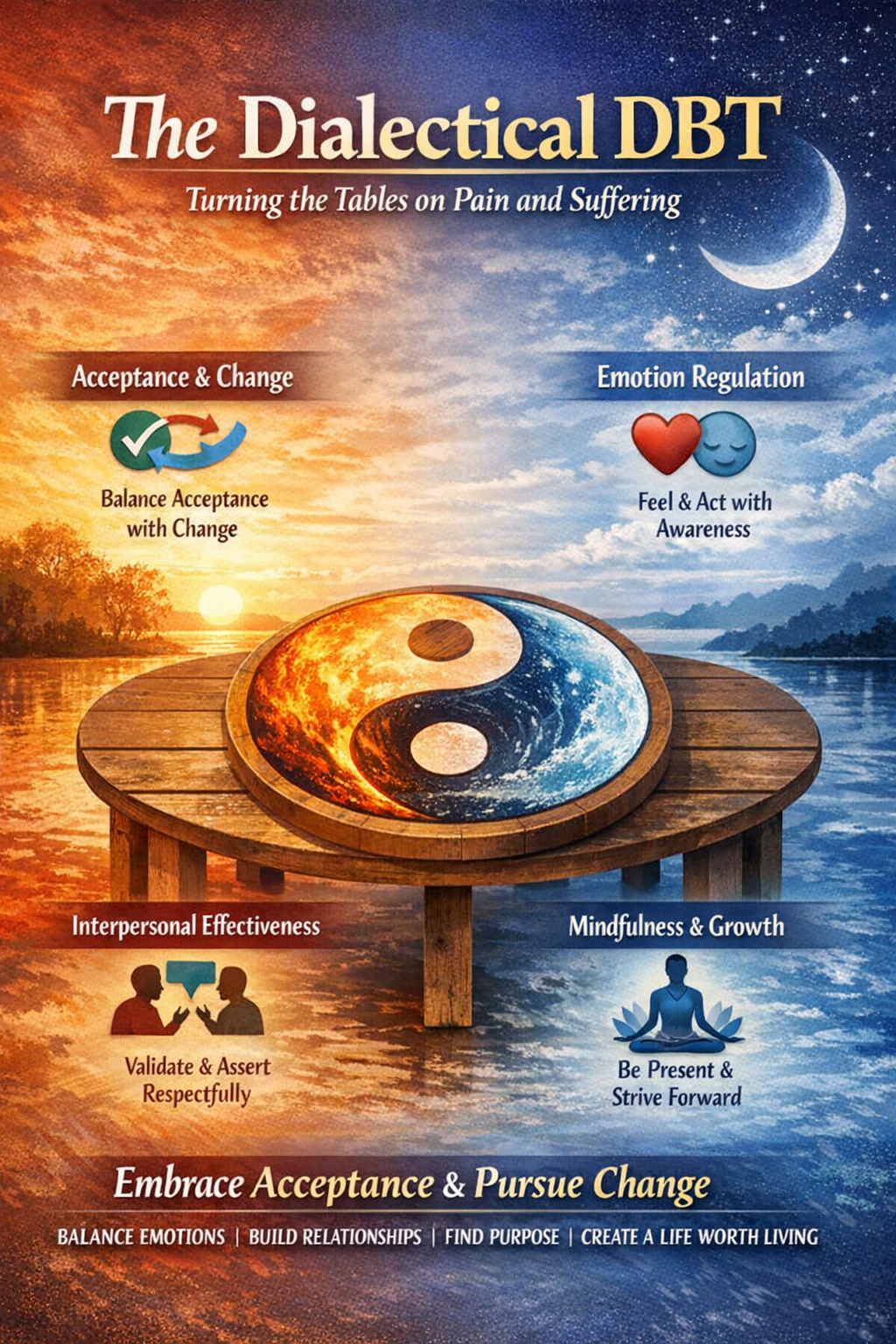
Dissecting the Dialectical DBT
Dialectical Behavior Therapy (DBT) transforms how individuals relate to emotions, themselves, and others by integrating acceptance and change. Through dialectical thinking, clients learn to acknowledge painful experiences without judgment while actively pursuing growth and goal-directed actions. DBT fosters emotional regulation, interpersonal effectiveness, mindfulness, and engagement with life’s meaning through tools like Life Worth Living questions.…
-
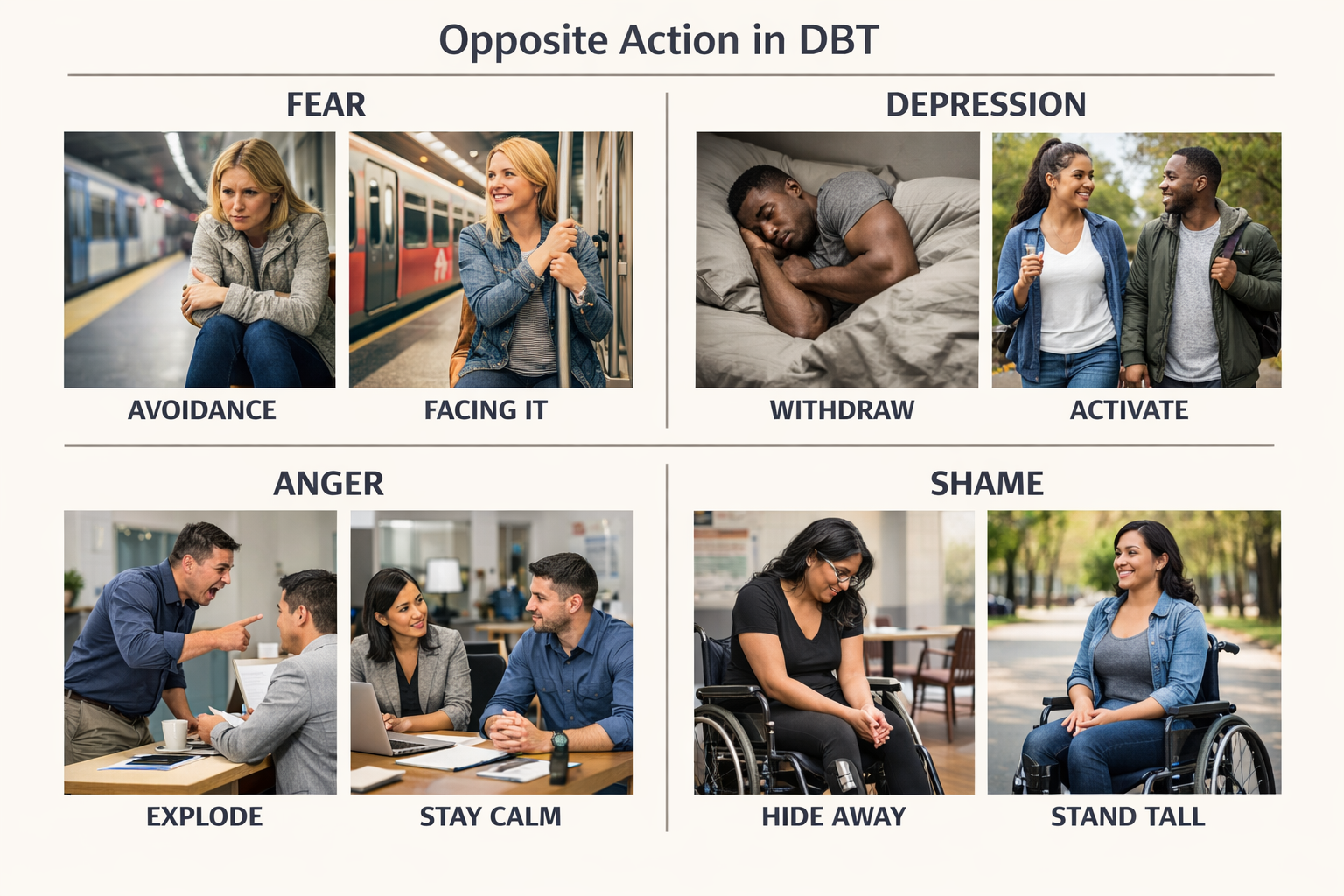
How Acting Against Emotion Commands It
Opposite Action teaches that emotions drive urges—but urges don’t have to dictate behavior. By deliberately acting opposite to unhelpful emotional impulses—approaching fear, activating against depression, softening anger, standing tall in shame—you retrain the nervous system. Over time, behavior reshapes emotion, transforming reactivity into resilience and emotional leadership.
-

Becoming Earned Secure through Practice
Becoming Earned Secure — From Insight to Embodiment Becoming earned secure is often framed as a matter of insight: learn your attachment style, understand your childhood, identify your triggers, and you will change. Insight helps. But it rarely rewires your reactions. Attachment strategies are not primarily cognitive. They are survival adaptations embedded in the nervous…
-
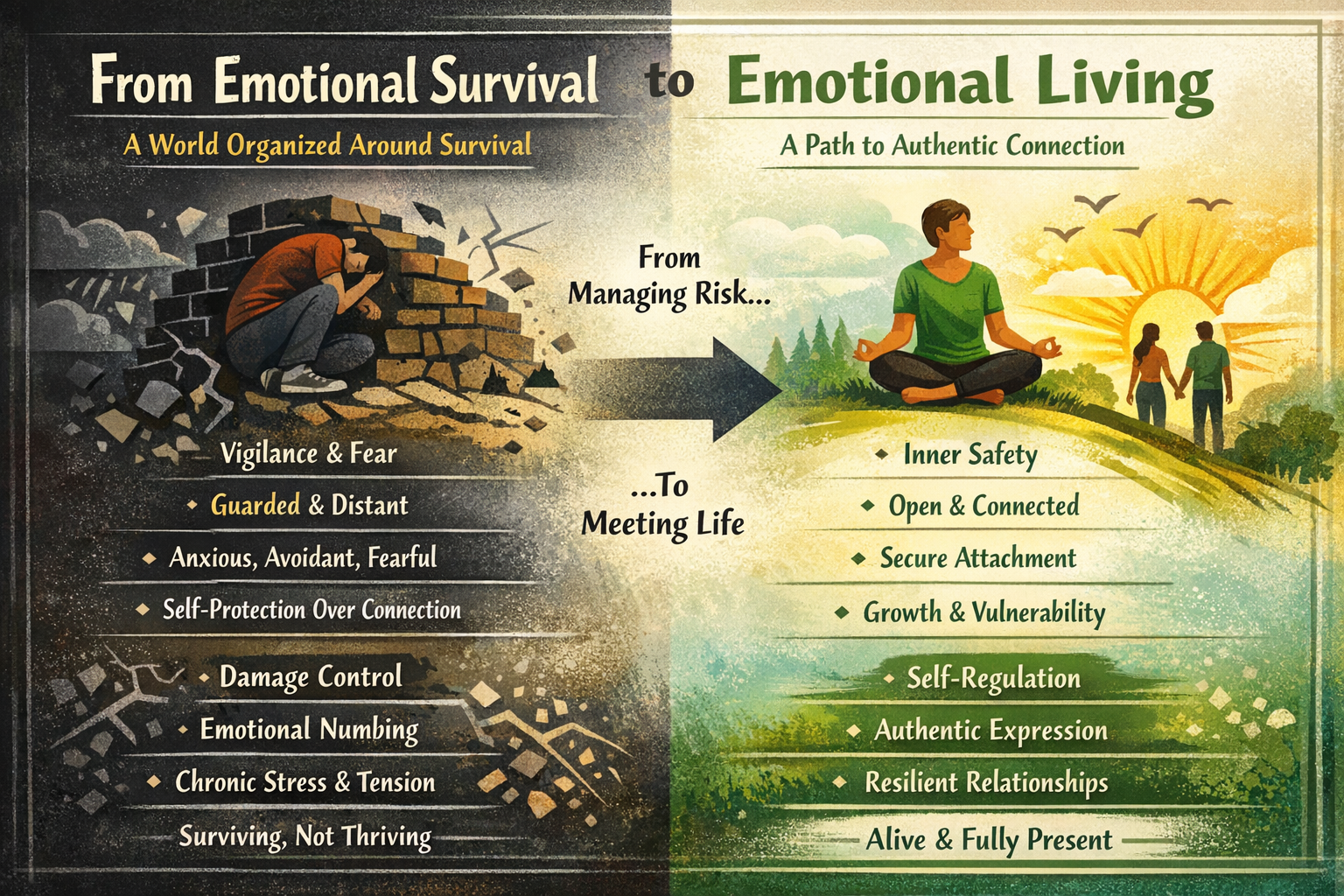
From Emotional Survival to Authentic Living
Emotional Survival—marked by fear, vigilance, self-protection, and shallow relationships—contrasts strongly with Emotional Living, defined by inner safety, secure attachment, openness, and authentic connection. It highlights how survival strategies adapt to early stress, while emotional living emerges through self-regulation, repair, and chosen vulnerability, enabling deeper relationships and a fully present life.
-

Why the Psyche Prefers Clarity Over Comfort
The Myth of the Comfort-Seeking Psyche Modern culture often assumes that human beings are primarily motivated by comfort: safety, pleasure, reassurance, and ease. From this perspective, psychological distress is framed as something to be minimized quickly, and emotional discomfort is treated as a problem to be soothed. Yet this model fails to explain a fundamental…
-
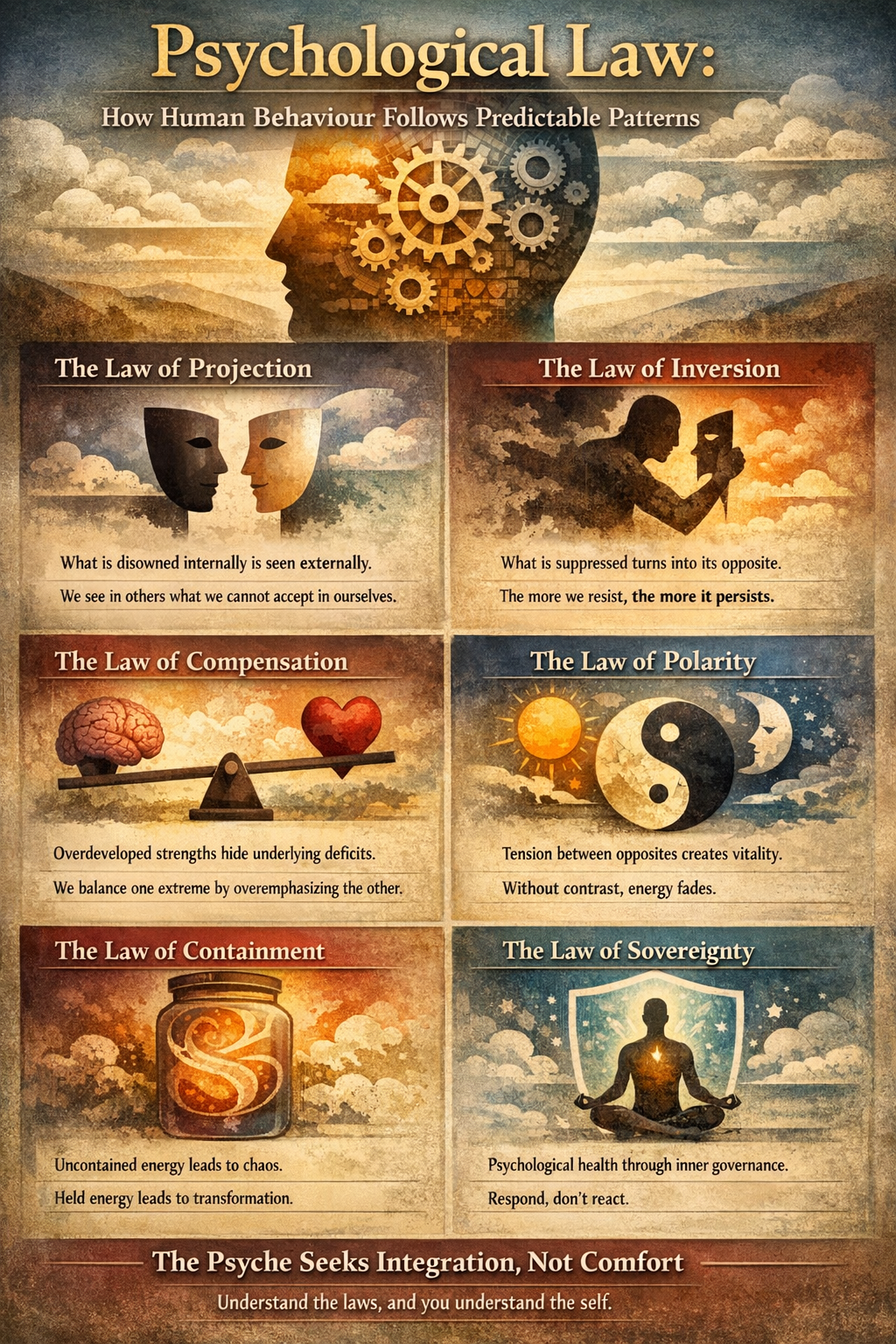
Human Behaviour’s Predictable Patterns
Human behavior is often seen as a matter of choice, morality, or personality, yet it follows predictable patterns—psychological laws. Projection, inversion, compensation, polarity, containment, and sovereignty describe how the psyche organizes energy and maintains coherence. Traits we resist or disown appear in others, suppressed impulses invert into indirect expressions, deficits provoke overcompensation, opposites generate vitality,…
-

Responding Rightly to What Life Presents
Frankl’s Meaning — Responding Rightly to What Life Presents In everyday language, “meaning” is often confused with happiness, satisfaction, or personal success. But for Viktor Frankl, meaning was never about comfort. It was about responsibility. Emerging from the unimaginable suffering of the Holocaust, Frankl proposed that meaning is not something we invent to feel better…
-

Tense Memories as Teachers: Why Certain Conflicts Stay With Us
Conflicts that leave behind tense, lingering memories are rarely just about what happened on the surface. They tend to function more like pressure tests—moments where our internal structures are stressed enough to reveal something essential about how we orient to the world. Long after the external situation has passed, the memory persists not because it…
-

Schopenhauer’s Will to Life
Excerpt: Schopenhauer’s Will to Life — Why Desire Precedes Meaning For Arthur Schopenhauer, human beings are not primarily rational creatures seeking meaning. Beneath thought, morality, and identity lies something more fundamental: the Will to Life — a blind, pre-rational drive to exist, to strive, to experience. We do not choose this force. It animates us.…